


Hey there! As a descaling tablet supplier, I've been getting a ton of questions lately about whether descaling tablets work better in hot or cold water. It's a super common query, and I'm here to break it all down for you.
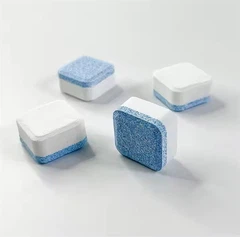
First off, let's talk about what descaling tablets are and why we need them. Over time, limescale builds up in our appliances like kettles, espresso machines, and coffee makers. This limescale can not only affect the taste of our drinks but also reduce the efficiency and lifespan of our beloved appliances. That's where descaling tablets come in. They're designed to dissolve that pesky limescale and keep our appliances running smoothly.
Now, let's dig into the hot vs. cold water debate.
How Descaling Tablets Work
Descaling tablets usually contain chemicals like citric acid or other acids that react with the limescale. When these acids come into contact with limescale (which is mainly calcium carbonate), a chemical reaction occurs. The acid breaks down the calcium carbonate into soluble salts and carbon dioxide gas. This process effectively dissolves the limescale, making it easier to rinse away.
Using Descaling Tablets in Hot Water
When you use descaling tablets in hot water, a few things happen. First of all, the heat speeds up the chemical reaction between the acids in the tablet and the limescale. Chemical reactions generally occur faster at higher temperatures because the molecules have more energy and move around more quickly. This means that the descaling process can be much faster in hot water compared to cold water.
For example, if you're descaling an espresso machine, using hot water can help the tablet dissolve faster and start working on the limescale right away. The hot water can also help to loosen up stubborn limescale deposits that might be stuck in the nooks and crannies of the machine.
Another advantage of using hot water is that it can make the descaling solution more effective at reaching all parts of the appliance. The heat causes the water to expand slightly, which can help the solution seep into small crevices where limescale might be hiding.
However, there are also a few downsides to using hot water. Some descaling tablets might react too quickly in hot water, causing them to fizz and foam excessively. This can be a bit messy, and it might also mean that the tablet is used up too quickly before it has a chance to fully clean all the limescale. Additionally, if the water is too hot, it could potentially damage some parts of the appliance, especially if it's made of plastic or other heat-sensitive materials.
Using Descaling Tablets in Cold Water
On the other hand, using descaling tablets in cold water has its own set of pros and cons. The main advantage is that the reaction between the tablet and the limescale is slower. This can be beneficial in some cases because it gives the tablet more time to work on the limescale, especially if the deposits are thick.
Cold water also reduces the risk of damaging heat-sensitive parts of the appliance. If you're descaling a kettle or a coffee maker with plastic components, using cold water can be a safer option.
But the biggest drawback of using cold water is the time it takes. The descaling process can be significantly slower in cold water because the chemical reaction is not as fast. You might have to leave the descaling solution in the appliance for a longer period of time to achieve the same results as using hot water.
Which is Better?
So, which is better: hot or cold water? Well, it really depends on the appliance you're descaling and the severity of the limescale buildup.
For appliances with thick limescale deposits, like a kettle that hasn't been descaled in a long time, using hot water might be the way to go. The faster reaction time can help to break down the stubborn limescale more quickly. You can check out our Limescale Tablets for Kettle which are great for this job.
If you're descaling a delicate appliance, such as an espresso machine with sensitive internal components, cold water might be a safer choice. Our Espresso Descaling Tablets are formulated to work well in both hot and cold water, ensuring a gentle yet effective clean for your espresso machine.
For appliances like Sage coffee makers, which are known for their quality and precision, you can use our Sage Descaling Tablets. You can choose to use hot or cold water depending on the level of limescale and the manufacturer's recommendations.


Tips for Using Descaling Tablets
- Read the instructions: Always read the instructions on the descaling tablet packaging. They'll usually give you specific guidelines on whether to use hot or cold water and how long to leave the solution in the appliance.
- Rinse thoroughly: After descaling, make sure to rinse the appliance thoroughly with clean water to remove any remaining descaling solution and dissolved limescale.
- Regular maintenance: To prevent excessive limescale buildup, it's a good idea to descale your appliances regularly. How often you do this depends on the hardness of your water and how often you use the appliance.
Conclusion
In conclusion, both hot and cold water have their advantages and disadvantages when it comes to using descaling tablets. The best approach is to consider the type of appliance you're descaling, the severity of the limescale buildup, and the manufacturer's recommendations.
If you're looking for high-quality descaling tablets for your appliances, we've got you covered. Our range of descaling tablets is designed to be effective, easy to use, and safe for your appliances. Whether you need to descale an espresso machine, a kettle, or a Sage coffee maker, we have the right product for you.
If you're interested in purchasing our descaling tablets or have any questions about our products, don't hesitate to reach out to us for a procurement discussion. We're here to help you keep your appliances in top-notch condition.
References
- Atkins, P., & de Paula, J. (2006). Physical Chemistry. Oxford University Press.
- Smith, J. (2018). Home Appliance Maintenance Guide. DIY Publishing.