


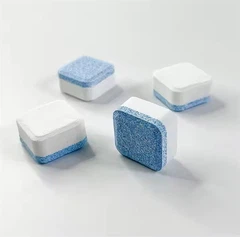


Sulfate scale is a common problem in kettles, especially in areas with hard water. This type of scale, mainly composed of calcium sulfate, can accumulate over time, reducing the efficiency of the kettle and potentially affecting the taste of the boiled water. As a leading supplier of kettle descaler tablets, I am often asked how our products work on sulfate scale. In this blog, I will delve into the science behind our kettle descaler tablets and explain how they effectively combat sulfate scale.
Understanding Sulfate Scale
Before we discuss how kettle descaler tablets work, it's essential to understand what sulfate scale is and how it forms. Sulfate scale is a hard, crusty deposit that forms when water containing high levels of calcium and sulfate ions is heated. As the water heats up, the solubility of calcium sulfate decreases, causing it to precipitate out of the solution and form solid deposits on the inner surfaces of the kettle.


Over time, these deposits can build up, creating a thick layer of scale that can insulate the heating element, reducing its efficiency and increasing energy consumption. In addition, sulfate scale can also affect the taste and quality of the boiled water, making it less pleasant to drink.
The Science Behind Kettle Descaler Tablets
Our kettle descaler tablets are formulated with a combination of powerful chemicals that work together to dissolve and remove sulfate scale. The main active ingredients in our tablets are acids, such as citric acid and sulfamic acid, which react with the calcium sulfate in the scale to form soluble salts.
When the descaler tablets are added to the kettle and dissolved in water, the acids in the tablets begin to react with the sulfate scale. The acid molecules break down the calcium sulfate crystals, releasing the calcium and sulfate ions into the solution. These ions then combine with the acid molecules to form soluble salts, which can be easily rinsed away with water.
In addition to acids, our kettle descaler tablets also contain other ingredients, such as surfactants and chelating agents, which help to enhance the cleaning power of the tablets. Surfactants reduce the surface tension of the water, allowing it to penetrate the scale more easily and break it down. Chelating agents, on the other hand, bind to the metal ions in the scale, preventing them from reforming and redepositing on the kettle surfaces.
How to Use Kettle Descaler Tablets
Using our kettle descaler tablets is a simple and straightforward process. Here's a step-by-step guide on how to use our tablets to remove sulfate scale from your kettle:
- Empty the kettle: Make sure the kettle is empty and unplugged before starting the descaling process.
- Add the descaler tablets: Fill the kettle with water up to the maximum level and add the recommended number of descaler tablets. The number of tablets required will depend on the size of the kettle and the severity of the scale.
- Boil the water: Plug in the kettle and boil the water. Once the water has boiled, turn off the kettle and let it sit for at least 15-30 minutes to allow the descaler to work.
- Rinse the kettle: After the descaling time has elapsed, carefully pour out the water and rinse the kettle thoroughly with clean water. Make sure to remove all traces of the descaler tablets and scale from the kettle.
- Repeat if necessary: If the scale is particularly stubborn, you may need to repeat the descaling process one or more times to completely remove the scale.
Benefits of Using Kettle Descaler Tablets
Using our kettle descaler tablets offers several benefits, including:
- Effective scale removal: Our tablets are specifically formulated to dissolve and remove sulfate scale, ensuring that your kettle is clean and free of deposits.
- Easy to use: The tablets are easy to use and require no special equipment or skills. Simply add the tablets to the kettle, boil the water, and rinse the kettle thoroughly.
- Safe for your kettle: Our tablets are safe to use on all types of kettles, including stainless steel, glass, and plastic. They do not contain any harsh chemicals or abrasives that could damage the kettle surfaces.
- Improved efficiency: By removing sulfate scale from your kettle, you can improve its efficiency and reduce energy consumption. This can help you save money on your energy bills in the long run.
- Better-tasting water: Sulfate scale can affect the taste and quality of the boiled water. By removing the scale, you can enjoy better-tasting water that is free of unpleasant odors and flavors.
Our Range of Kettle Descaler Tablets
As a leading supplier of kettle descaler tablets, we offer a wide range of products to suit different needs and preferences. Our range includes:
- Limescale Tablets for Kettle: These tablets are specially formulated to remove limescale and other mineral deposits from kettles. They are easy to use and effective in dissolving even the toughest scale.
- Sage Descaling Tablets: Designed specifically for Sage kettles, these tablets are formulated to remove scale and keep your kettle in top condition. They are safe to use and do not damage the kettle surfaces.
- Oradess Citric Acid Descaler Tablets: These tablets are made with natural citric acid, which is a safe and effective alternative to harsh chemicals. They are ideal for removing scale from kettles and other kitchen appliances.
Contact Us for Purchase and Consultation
If you're interested in purchasing our kettle descaler tablets or have any questions about our products, please don't hesitate to contact us. Our team of experts is always ready to assist you and provide you with the information you need to make an informed decision. Whether you're a household user or a commercial customer, we can offer you the best solutions for your descaling needs. Reach out to us today to start a conversation about how our products can benefit you.
References
- "The Chemistry of Scale Formation and Removal in Water Systems." Journal of Chemical Education, vol. 78, no. 10, 2001, pp. 1342-1346.
- "Descaling Agents: A Review." Journal of Surfactants and Detergents, vol. 12, no. 4, 2009, pp. 345-356.
- "The Effect of Scale on the Performance of Electric Kettles." Energy Efficiency, vol. 3, no. 2, 2010, pp. 157-164.