



Hey there! As a denture cleaner supplier, I get asked a lot, "How do I know if my denture cleaner is working effectively?" It's a great question, and I'm here to break it down for you.
First off, let's talk about what an effective denture cleaner should do. A good cleaner is supposed to remove food particles, plaque, and stains from your dentures. It should also help kill bacteria and fungi that can cause bad breath and infections. If your cleaner isn't doing these things, then it's not doing its job.
One of the easiest ways to tell if your denture cleaner is working is by looking at your dentures after cleaning. If they still have visible food debris or stains, then the cleaner might not be strong enough. For example, if you notice coffee or tobacco stains that haven't come off, it's a sign that you might need to switch to a more powerful cleaner. You can check out our False Teeth Cleaning Solution which is formulated to tackle tough stains.
Another thing to consider is the smell. Clean dentures shouldn't have a funky odor. If your dentures still smell bad after being cleaned, it could mean that the cleaner isn't killing all the bacteria. Bacteria can cause a foul smell, and if your cleaner isn't getting rid of them, you're going to have a problem. You want your dentures to smell fresh and clean, just like natural teeth.
You can also pay attention to how your mouth feels. If you're experiencing irritation or soreness, it could be because there are still bacteria or debris on your dentures. A good denture cleaner should leave your dentures in a condition that's comfortable for your mouth. If you start to notice redness or swelling in your gums, it might be time to re - evaluate your cleaner.
Now, let's talk about the cleaning process itself. Are you following the instructions on the cleaner? Sometimes, people don't use the cleaner correctly, and that can affect its effectiveness. For example, if you're not soaking your dentures for the recommended amount of time, the cleaner might not have enough time to do its job. Make sure you read the label carefully and follow the directions.
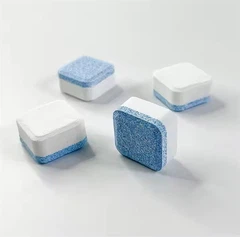
Some denture cleaners come with additional features, like a fizzing action. The fizzing is supposed to help loosen and remove debris. If you're using a cleaner with a fizzing action and you don't see much fizzing, it could mean that the cleaner is expired or that you're not using the right amount of water. You want to see a good amount of fizzing when you drop the tablet or pour the solution into the water.
You can also do a simple taste test. After cleaning your dentures, rinse them thoroughly and then take a small sip of water and swish it around your mouth. If you can taste a strange or unpleasant flavor, it could be a sign that there are still residues from the cleaner or that the cleaner isn't working well.
Let's dig a bit deeper into the science behind denture cleaning. Bacteria on dentures can form biofilms. These biofilms are like a protective layer that makes it harder for cleaners to penetrate and kill the bacteria. An effective denture cleaner should be able to break through these biofilms. Some cleaners contain enzymes that are specifically designed to break down the biofilms. If your cleaner doesn't have these enzymes, it might not be as effective in killing bacteria.
We've done a lot of research and testing on our denture cleaners. We know that different types of dentures might require different cleaning methods. For example, partial dentures might have more hard - to - reach areas, and you need a cleaner that can get into those crevices. Our False Teeth Cleaning Solution is designed to work well for both full and partial dentures.
Another aspect to consider is the compatibility of the cleaner with your denture material. Some cleaners might be too harsh for certain types of denture materials. For example, if you have a denture made of a delicate material, a strong chemical cleaner could damage it. You need to make sure that the cleaner you're using is safe for your specific denture.
If you're still not sure if your denture cleaner is working effectively, you can consult your dentist. They can take a look at your dentures and give you an expert opinion. They might be able to spot things that you can't, like microscopic bacteria or hidden stains.
As a denture cleaner supplier, we're always looking for ways to improve our products. We're constantly researching and developing new formulas to make our cleaners more effective. We understand that having clean and healthy dentures is important for your overall well - being.
If you're interested in trying our denture cleaners, we'd love to hear from you. Whether you're a dental professional looking to stock our products or an individual looking for a better cleaning solution, we're here to help. We offer high - quality denture cleaners at competitive prices. Our products are made with the latest technology and research to ensure that they're as effective as possible.
We can provide you with samples so that you can test our cleaners for yourself. You can see firsthand how well they work in removing stains, killing bacteria, and leaving your dentures clean and fresh. We believe in our products, and we're confident that once you try them, you'll be satisfied.
If you're thinking about making a purchase, we can have a detailed discussion about your needs. We can help you choose the right cleaner based on the type of dentures you have and your specific cleaning requirements. Whether you need a daily cleaner or a deep - cleaning solution for occasional use, we've got you covered.


In conclusion, knowing if your denture cleaner is working effectively involves paying attention to the appearance, smell, and feel of your dentures. It also means following the cleaning instructions correctly and considering the science behind denture cleaning. If you're having trouble with your current cleaner, give our products a try. We're here to make sure you have clean, comfortable, and healthy dentures.
References
- Dental Hygiene Research Journal: Studies on Denture Cleaning and Biofilm Removal
- Journal of Oral Rehabilitation: The Impact of Denture Cleaners on Oral Health
- International Journal of Prosthodontics: Compatibility of Denture Cleaners with Different Denture Materials