




Espresso machines are a staple in many households and cafes, delivering that rich, bold shot of espresso that so many of us crave. However, over time, these machines can suffer from the build - up of limescale, which is a hard, chalky deposit mainly composed of calcium carbonate. This limescale can clog the internal components of the espresso machine, reduce its efficiency, and even affect the taste of the espresso. That's where espresso descaling tablets come in. As a supplier of high - quality espresso descaling tablets, I'm here to explain how these tablets work and why they are essential for maintaining your espresso machine.
Understanding Limescale Build - up
Before delving into how descaling tablets work, it's crucial to understand how limescale forms in espresso machines. When water is heated, the minerals dissolved in it, such as calcium and magnesium, become less soluble. As a result, they precipitate out of the water and form limescale deposits on the heating elements, pipes, and other internal parts of the espresso machine.
The presence of limescale can cause a variety of problems. It can reduce the water flow through the machine, leading to longer brewing times and weaker espresso shots. It can also cause the machine to overheat, potentially damaging the heating element and other components. Moreover, limescale can harbor bacteria and other contaminants, which can affect the taste and quality of the espresso.
How Espresso Descaling Tablets Work
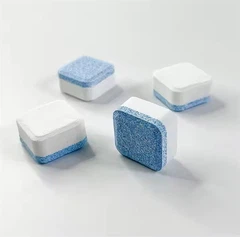
Espresso descaling tablets are formulated to break down and remove limescale deposits from the internal components of the espresso machine. The main active ingredients in these tablets are typically acids, such as citric acid or acetic acid.
Chemical Reaction
When the descaling tablet is dissolved in water, the acid in the tablet reacts with the calcium carbonate in the limescale. The chemical reaction can be represented by the following equation:
[CaCO_{3}+ 2H^{+}\rightarrow Ca^{2 +}+H_{2}O + CO_{2}\uparrow]
In this reaction, the hydrogen ions ((H^{+})) from the acid react with the calcium carbonate ((CaCO_{3})) in the limescale. This reaction breaks down the limescale into calcium ions ((Ca^{2+})), water ((H_{2}O)), and carbon dioxide gas ((CO_{2})). The calcium ions dissolve in the water, and the carbon dioxide gas is released as bubbles.
The process of breaking down the limescale is called a neutralization reaction because the acid in the descaling tablet neutralizes the basic calcium carbonate in the limescale. This reaction effectively dissolves the limescale, allowing it to be flushed out of the machine with the water.
Dissolving and Dispersing
In addition to the chemical reaction, the descaling tablets also contain surfactants and other additives. Surfactants are substances that reduce the surface tension of the water, allowing it to penetrate the limescale deposits more easily. They help the acid in the tablet to come into contact with more of the limescale, enhancing the descaling process.
The additives in the descaling tablets also help to disperse the dissolved limescale particles in the water. This prevents the limescale from re - depositing on the internal components of the machine as the water is flushed out.
Using Espresso Descaling Tablets
Using espresso descaling tablets is a relatively straightforward process. Here are the general steps:
- Prepare the Machine: Turn off the espresso machine and let it cool down completely. Empty the water reservoir and remove any coffee grounds or other debris from the machine.
- Dissolve the Tablet: Fill the water reservoir with the recommended amount of water, usually specified on the descaling tablet packaging. Drop the descaling tablet into the water and stir gently until it is completely dissolved.
- Run the Descale Cycle: Start the descale cycle on the espresso machine. This may involve pressing a specific button or following a series of steps in the machine's manual. The machine will pump the descaling solution through the internal components, dissolving the limescale as it goes.
- Rinse the Machine: Once the descale cycle is complete, empty the water reservoir and refill it with clean water. Run the machine through a few cycles to rinse out any remaining descaling solution and dissolved limescale.
Different Types of Espresso Descaling Tablets
There are several types of espresso descaling tablets available on the market, each with its own advantages.
Citric Acid - Based Tablets
Citric acid is a natural acid found in citrus fruits. Tablets based on citric acid are popular because they are relatively gentle on the internal components of the espresso machine. They are also biodegradable and environmentally friendly. Oradess Citric Acid Descaler Tablets are an example of citric acid - based descaling tablets that are highly effective in removing limescale.
Acetic Acid - Based Tablets
Acetic acid is the main component of vinegar. Acetic acid - based descaling tablets are known for their strong descaling power. They can dissolve stubborn limescale deposits more quickly than citric acid - based tablets. However, they may have a stronger odor, and they can be more corrosive to some types of materials, so they need to be used with caution.


Brand - Specific Tablets
Some manufacturers produce descaling tablets specifically designed for their espresso machines. For example, Sage Descaling Tablets are formulated to work with Sage espresso machines. These tablets are often optimized to provide the best descaling performance for the specific model of the machine.
Benefits of Using Espresso Descaling Tablets
Using espresso descaling tablets regularly offers several benefits:
Prolonged Machine Life
By removing limescale deposits, descaling tablets help to prevent damage to the internal components of the espresso machine. This can extend the lifespan of the machine, saving you money in the long run.
Improved Performance
Descaling the machine restores its water flow and heating efficiency. This results in faster brewing times and better - tasting espresso shots.
Hygiene
Removing limescale also eliminates the breeding ground for bacteria and other contaminants. This ensures that the espresso you drink is clean and safe.
Other Applications of Descaling Tablets
Descaling tablets are not only useful for espresso machines. They can also be used to descale other appliances that come into contact with hard water, such as kettles. Limescale Tablets for Kettle work in a similar way to espresso descaling tablets, breaking down and removing limescale deposits from the inside of the kettle.
Why Choose Our Espresso Descaling Tablets
As a supplier of espresso descaling tablets, we take pride in offering high - quality products. Our tablets are formulated using the latest technology to ensure maximum descaling power while being gentle on your espresso machine. We use only the highest - quality ingredients, and our products are rigorously tested to meet the highest standards of performance and safety.
We also offer a range of descaling tablets to suit different needs and preferences. Whether you prefer citric acid - based tablets for their environmental friendliness or acetic acid - based tablets for their strong descaling power, we have the right product for you.
Contact Us for Procurement
If you are interested in purchasing our espresso descaling tablets, we invite you to contact us for procurement. Our team of experts is ready to assist you with any questions you may have and to help you find the right descaling tablets for your needs. Regular descaling of your espresso machine is essential for its performance and longevity, and our high - quality descaling tablets are the perfect solution.
References
- "The Chemistry of Limescale and Descaling Agents" - Journal of Chemical Education
- Espresso Machine User Manuals
- Manufacturer's Information on Descaling Tablets