



Hey there! As a supplier of kettle descaler tablets, I often get asked if these tablets can be used in other appliances. It's a valid question, especially when you're trying to keep your home appliances in top - notch condition without breaking the bank. So, let's dive right in and explore this topic.
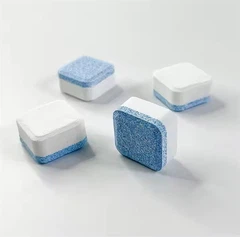
First off, let's understand what kettle descaler tablets are. They're basically formulated to remove limescale and other mineral deposits that build up inside kettles over time. Limescale is a common problem, especially in areas with hard water. When water is boiled repeatedly, the minerals in it precipitate out and stick to the walls of the kettle. This not only affects the efficiency of the kettle but can also give your water an unpleasant taste.
Now, can these tablets be used in other appliances? Well, it depends on the appliance.
Coffee Machines
Coffee machines are one of the most likely candidates for using kettle descaler tablets. Just like kettles, coffee machines are also exposed to hot water and are prone to limescale buildup. Limescale in a coffee machine can clog the pipes, reduce the flow of water, and ultimately affect the taste of your coffee.
Most kettle descaler tablets can be used in coffee machines, but you need to be careful. Some coffee machines come with their own specific descaling requirements. For example, espresso machines are a bit more delicate. They have complex internal mechanisms, and using the wrong descaler can damage them. If you're looking for a descaler specifically for espresso machines, you can check out Espresso Descaling Tablets. These are formulated to be gentle on the machine while effectively removing limescale.
To use kettle descaler tablets in a coffee machine, you usually need to follow a similar process as descaling a kettle. Fill the water reservoir with water and add the appropriate number of tablets according to the instructions. Then, run a brewing cycle without coffee grounds. This will allow the descaler solution to flow through the machine and dissolve the limescale. After that, run a few cycles of clean water to rinse out the descaler.
Irons
Irons are another appliance that can benefit from descaling. When you use an iron, the water in the reservoir is heated and turned into steam. If the water has a high mineral content, limescale can build up in the steam vents, causing the steam to sputter or not come out at all.
In most cases, kettle descaler tablets can be used to descale an iron. However, you need to be extra cautious. Irons have small steam vents, and if the descaler is too strong, it can damage them. First, make sure to empty the water reservoir of the iron. Then, dissolve a kettle descaler tablet in a small amount of water and pour it into the reservoir. Let it sit for a while, following the tablet's instructions. After that, set the iron to steam and let it release the steam until the descaler solution is gone. Finally, fill the reservoir with clean water and run a few steam cycles to rinse it out.
Humidifiers
Humidifiers are designed to add moisture to the air. They use water, and over time, limescale can accumulate in the water tank and the internal components. This can not only reduce the efficiency of the humidifier but also lead to the growth of bacteria and mold.
Some kettle descaler tablets can be used to clean humidifiers. But again, you need to check the manufacturer's instructions for your humidifier. Some humidifiers are made of sensitive materials, and using the wrong descaler can cause damage. If you're concerned about using a descaler that's safe for the environment and your humidifier, you might want to look into Eco - Friendly Descaler Cleaning Tablets. These tablets are formulated to be gentle yet effective.
To descale a humidifier with a kettle descaler tablet, empty the water tank and dissolve the tablet in water according to the instructions. Pour the solution into the tank and let it soak for the recommended time. Then, drain the solution and rinse the tank thoroughly with clean water.
Water Bottles
Yes, you read that right! Water bottles can also get a buildup of limescale, especially if you use them with hard water. This can make the water taste bad and leave a residue inside the bottle.
Bottle Bright Cleaning Tablets are a great option for cleaning water bottles. But if you don't have those on hand, some kettle descaler tablets can also do the job. Fill the water bottle with warm water and add a kettle descaler tablet. Let it sit for a few hours or overnight. Then, scrub the inside of the bottle with a brush and rinse it thoroughly.
When Not to Use Kettle Descaler Tablets
While kettle descaler tablets can be used in many appliances, there are some cases where you should avoid using them. Appliances made of certain materials like aluminum or copper can react with the chemicals in the descaler tablets. For example, aluminum can corrode when exposed to acidic descalers. So, if you have an aluminum - bodied appliance, it's best to look for a descaler specifically designed for it.
Also, appliances with electronic components that are sensitive to moisture or chemicals should be treated with caution. Some high - end appliances have internal sensors and circuits that can be damaged by the descaler solution. Always check the manufacturer's instructions before using a kettle descaler tablet on any appliance.
In conclusion, kettle descaler tablets can be a versatile solution for descaling many household appliances. They're cost - effective and convenient. However, you need to use them wisely, following the instructions and considering the specific requirements of each appliance.
If you're interested in purchasing our high - quality kettle descaler tablets or have any questions about using them in different appliances, feel free to reach out for a procurement discussion. We're here to help you keep your appliances in great shape!


References
- "Home Appliance Maintenance Guide", General Publishing House
- "Understanding Limescale and Its Effects on Appliances", Science Research Journal