


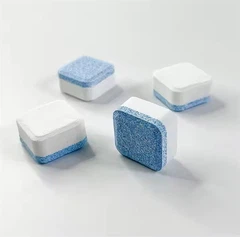


Hey there! As a supplier of Kettle Descaler Tablets, I often get asked a bunch of questions about using our products. One question that pops up quite a bit is, "Can I use Kettle Descaler Tablets in a kettle with a brass interior?" Well, let's dig into this topic and find out.


First off, let's talk about what limescale is and why we need descaler tablets. Limescale is that white, chalky stuff that builds up inside kettles over time. It's mainly made up of calcium and magnesium deposits from the water we use. When you heat water in a kettle, these minerals can't stay dissolved and start to form solid deposits on the kettle's interior. This not only looks yucky but can also affect the kettle's performance. It can make the kettle take longer to boil water and even reduce its lifespan.
That's where our Kettle Descaler Tablets come in. They're designed to break down and remove limescale effectively. But when it comes to a kettle with a brass interior, things get a bit more complicated.
Brass is an alloy made up of copper and zinc. It's a popular material for kettle interiors because it's durable and has good heat conductivity. However, brass can react with certain chemicals. Most kettle descaler tablets contain acids, usually citric acid or acetic acid. These acids are great at dissolving limescale, but they can also react with brass under certain conditions.
The good news is that our Limescale Tablets for Kettle are formulated to be gentle on most kettle materials, including brass. The acids in our tablets are at a concentration that's strong enough to remove limescale but not so strong that they'll cause significant damage to the brass. But there are still some things you need to keep in mind.
If your kettle has a brass interior, it's important to follow the instructions on the descaler tablet package carefully. Don't leave the tablets in the kettle for longer than recommended. Overexposure to the acidic solution can cause the brass to corrode. Corrosion can make the brass look dull and pitted, and it can also weaken the material over time.
Another thing to consider is the frequency of descaling. If you use your kettle with a brass interior regularly, you might be tempted to descale it often. But too much descaling can also be harmful to the brass. We recommend descaling your kettle every 1 - 2 months, depending on how hard your water is. Hard water has a higher concentration of minerals, so you might need to descale more frequently.
Let's talk about the descaling process itself. First, fill your kettle with water up to the maximum level. Then, drop in the recommended number of Kettle Descaler Tablets. Bring the water to a boil and then let it sit for the recommended time, usually around 15 - 30 minutes. After that, pour out the solution and rinse the kettle thoroughly with clean water. You might need to do this a few times to make sure all the descaler residue is removed.
Now, you might be wondering if our descaler tablets are safe for other types of appliances. Well, we also have Espresso Descaling Tablets that are specifically designed for espresso machines. These tablets have a different formulation to suit the needs of espresso machines, which have more delicate components.
In conclusion, yes, you can use our Kettle Descaler Tablets in a kettle with a brass interior, but you need to be careful. Follow the instructions, don't overdo it, and you'll be able to keep your kettle clean and in good condition. Our tablets are a great way to remove limescale and extend the life of your kettle.
If you're interested in purchasing our Kettle Descaler Tablets or have any other questions, feel free to reach out. We're always happy to help you find the right product for your needs. Whether you're a home user or a business looking to stock up on descaling products, we've got you covered.
References
- General knowledge on limescale formation and descaling processes.
- Manufacturer's guidelines for kettle descaler tablets.