

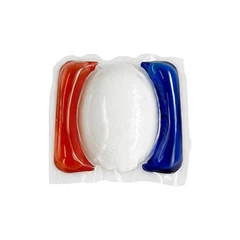
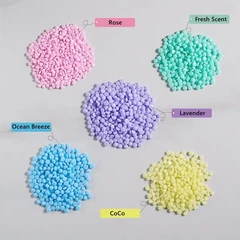

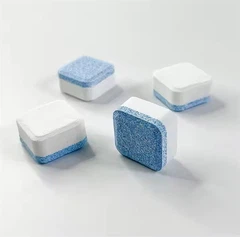

Descaling tablets are a popular solution for maintaining the efficiency and longevity of various household appliances. They are commonly used in coffee machines, kettles, and espresso makers to remove limescale buildup. However, a question that often arises is whether descaling tablets can be used in refrigerators. In this blog post, we'll explore this topic in detail, drawing on scientific knowledge and our experience as a descaling tablet supplier.


Understanding Descaling Tablets
Descaling tablets are formulated to break down and remove limescale, a hard, chalky deposit that forms when water containing calcium and magnesium salts evaporates. Limescale can accumulate in appliances over time, reducing their efficiency and potentially causing damage. Descaling tablets typically contain acids, such as citric acid or acetic acid, which react with the limescale to dissolve it.
Our company offers a range of descaling tablets, including Espresso Descaling Tablets, Limescale Tablets for Kettle, and Powerful Coffee Machine Descaling Tablet. These tablets are designed to be effective and safe for use in specific appliances, but can they be used in refrigerators?
The Function and Structure of Refrigerators
Refrigerators are complex appliances that work by removing heat from the interior and expelling it to the outside. They consist of several components, including a compressor, condenser, evaporator, and refrigerant. Unlike coffee machines and kettles, refrigerators do not have a direct contact with water in the same way, and limescale is not a common issue in the refrigeration process.
The main concern in a refrigerator is maintaining a clean and odor - free environment. Mold, bacteria, and food residues are more likely to be problems than limescale. However, there are some parts of a refrigerator where water is present, such as the defrost drain and the ice maker.
Can Descaling Tablets Be Used in Refrigerators?
In the Defrost Drain
The defrost drain in a refrigerator is a small tube that allows water from the defrosting process to drain out of the fridge. Over time, this drain can become clogged with debris, including mold and slime. In theory, the acids in descaling tablets could help break down some of these deposits.
However, it's important to note that the defrost drain is connected to the interior of the refrigerator, and any chemicals used in the drain could potentially contaminate the food stored inside. Before using a descaling tablet in the defrost drain, it's crucial to ensure that the tablet is food - safe. Our descaling tablets are formulated to be safe for use in appliances that come into contact with food, but it's still advisable to rinse the drain thoroughly after descaling.
In the Ice Maker
Ice makers in refrigerators are another area where water is present. Limescale can build up in the ice maker over time, affecting the quality and quantity of ice produced. Using a descaling tablet in the ice maker can help remove this limescale.
To use a descaling tablet in an ice maker, first, empty the ice bin and turn off the ice maker. Dissolve the descaling tablet in a container of water according to the manufacturer's instructions. Then, pour the solution into the ice maker reservoir. Let the solution sit for the recommended time, usually around 30 minutes to an hour. After that, drain the solution and rinse the ice maker thoroughly with clean water. Run a few cycles of ice production to flush out any remaining descaling solution.
Potential Risks and Precautions
While descaling tablets can be used in certain parts of a refrigerator, there are some risks and precautions to consider.
- Chemical Residue: As mentioned earlier, any chemicals used in the refrigerator could potentially contaminate food. It's essential to rinse all parts thoroughly after descaling to remove any residue.
- Compatibility: Not all descaling tablets are suitable for use in refrigerators. Some tablets may contain chemicals that could damage the plastic or rubber components in the fridge. Always check the product label to ensure that the tablet is safe for use in refrigerators.
- Odor: Descaling tablets can have a strong odor, which could linger in the refrigerator. To minimize this, open the refrigerator door for a while after descaling to allow the odor to dissipate.
Best Practices for Using Descaling Tablets in Refrigerators
- Read the Instructions: Always follow the manufacturer's instructions when using descaling tablets. This includes the recommended dosage, contact time, and rinsing procedures.
- Test in a Small Area: Before using a descaling tablet in the entire refrigerator, test it in a small, inconspicuous area to ensure that it does not cause any damage.
- Use Food - Safe Tablets: Choose descaling tablets that are specifically labeled as food - safe. This will help ensure that there is no risk of food contamination.
Conclusion
In conclusion, descaling tablets can be used in certain parts of a refrigerator, such as the defrost drain and the ice maker, to remove limescale and other deposits. However, it's important to take precautions to ensure the safety of the food stored in the fridge and to avoid damaging the appliance.
As a descaling tablet supplier, we are committed to providing high - quality products that are effective and safe for use in a variety of appliances. If you have any questions about using our descaling tablets in your refrigerator or other appliances, please feel free to contact us for more information. We are always happy to assist you in finding the best solution for your descaling needs. Whether you need Espresso Descaling Tablets, Limescale Tablets for Kettle, or Powerful Coffee Machine Descaling Tablet, we have the right product for you.
If you are interested in purchasing our descaling tablets for your business or personal use, we invite you to contact us to discuss your requirements. Our team of experts is ready to assist you in finding the most suitable products and providing guidance on their proper use.
References
- "Appliance Maintenance Handbook", published by a leading home appliance research institute.
- "The Chemistry of Descaling Agents", a scientific paper from a well - known chemistry journal.