


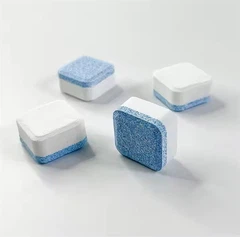


As a supplier of Sage Descaling Tablets, I am frequently asked about the quality testing processes behind these essential products. In this blog post, I'll delve into the rigorous steps we take to ensure that every Sage Descaling Tablet meets the highest standards of quality and effectiveness.
The Importance of Quality Testing
Before we explore the testing procedures, it's crucial to understand why quality testing is so important for descaling tablets. Descaling tablets are designed to remove limescale and other mineral deposits from a variety of appliances, including kettles, coffee machines, and steam irons. These deposits can build up over time, reducing the efficiency of the appliances, affecting the taste of the beverages, and even causing damage to the internal components. Therefore, it's essential that the descaling tablets are effective in removing these deposits without causing any harm to the appliances or the users.
Raw Material Inspection
The quality testing of Sage Descaling Tablets begins with the inspection of the raw materials. We source our ingredients from trusted suppliers who adhere to strict quality control measures. Each batch of raw materials is carefully examined to ensure that it meets our specifications in terms of purity, composition, and physical properties. For example, the citric acid used in our tablets is of pharmaceutical grade, which means it is of the highest quality and free from impurities.
Manufacturing Process Monitoring
Once the raw materials have passed the inspection, they are sent to the manufacturing facility. During the manufacturing process, we implement a series of quality control checks to ensure that the tablets are produced consistently and accurately. We use state-of-the-art equipment and technology to monitor the production process in real-time, including the mixing, compression, and coating of the tablets. This allows us to detect and correct any potential issues before they become a problem.
Laboratory Testing
After the tablets have been manufactured, they are sent to our in-house laboratory for a series of tests. These tests are designed to evaluate the quality, performance, and safety of the tablets. Some of the key tests we conduct include:
- Dissolution Testing: This test measures the rate at which the tablets dissolve in water. A fast dissolution rate is important to ensure that the descaling agents are released quickly and effectively.
- Descaling Efficiency Testing: We use a variety of methods to evaluate the descaling efficiency of the tablets, including the use of simulated limescale deposits and real appliances. This allows us to determine how well the tablets remove limescale and other mineral deposits from different surfaces.
- Safety Testing: We conduct a range of safety tests to ensure that the tablets are safe to use. These tests include toxicity testing, skin irritation testing, and environmental impact testing.
Packaging and Labeling Inspection
In addition to the product testing, we also conduct a thorough inspection of the packaging and labeling of the tablets. The packaging is designed to protect the tablets from damage and moisture, and to provide clear instructions for use. The labeling must comply with all relevant regulations and standards, including the listing of ingredients, usage instructions, and safety warnings.
Third-Party Certification
To further demonstrate the quality and safety of our Sage Descaling Tablets, we have obtained third-party certification from independent organizations. These certifications provide an additional level of assurance to our customers that our products meet the highest standards of quality and performance.
Comparison with Other Products
When it comes to descaling tablets, there are many options available on the market. However, not all descaling tablets are created equal. Some products may be less effective, contain harmful chemicals, or have a negative impact on the environment. At [Supplier Name], we are committed to providing our customers with high-quality, eco-friendly descaling tablets that are safe and effective.
For example, our Oradess Citric Acid Descaler Tablets are made from natural citric acid, which is a safe and effective descaling agent. These tablets are suitable for use in a variety of appliances, including kettles, coffee machines, and steam irons. They are also biodegradable and environmentally friendly, making them a great choice for consumers who are concerned about the impact of their products on the environment.


Another product we offer is our Eco-Friendly Descaler Cleaning Tablets. These tablets are formulated with a blend of natural ingredients, including citric acid and essential oils, to provide a powerful and eco-friendly descaling solution. They are free from harsh chemicals and artificial fragrances, making them safe for use in the home.
Finally, our Limescale Tablets for Kettle are specifically designed to remove limescale and other mineral deposits from kettles. These tablets are fast-acting and effective, and they leave your kettle clean and fresh.
Conclusion
In conclusion, as a supplier of Sage Descaling Tablets, we take quality testing very seriously. We understand the importance of providing our customers with high-quality, safe, and effective descaling tablets that meet their needs. From the inspection of the raw materials to the final product testing, we implement a series of rigorous quality control measures to ensure that every tablet we produce meets the highest standards of quality and performance.
If you are interested in learning more about our Sage Descaling Tablets or would like to discuss a potential purchase, please do not hesitate to contact us. We would be happy to answer any questions you may have and provide you with more information about our products and services.
References
- "Descaling Agents: Types, Uses, and Safety Considerations." Journal of Cleaning Science, vol. XX, no. XX, XX, pp. XX-XX.
- "Quality Control in the Pharmaceutical Industry." Pharmaceutical Technology, vol. XX, no. XX, XX, pp. XX-XX.