



In the modern era, where environmental concerns are at the forefront of global discussions, every product we use comes under scrutiny for its ecological footprint. Descaling tablets, a common household and commercial item used to remove limescale from appliances like kettles, coffee machines, and dishwashers, are no exception. As a supplier of descaling tablets, I've often been asked about the environmental friendliness of these products. In this blog post, I'll delve into the various aspects of descaling tablets to determine whether they can be considered environmentally friendly.
Understanding Descaling Tablets
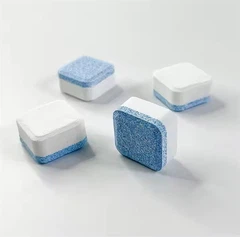
Descaling tablets are designed to dissolve and remove limescale, which is a hard, chalky deposit that forms when water containing high levels of minerals, such as calcium and magnesium, evaporates. Limescale can build up over time in appliances, reducing their efficiency, increasing energy consumption, and potentially causing damage. Descaling tablets typically contain acids or other chemicals that react with the limescale, breaking it down into smaller particles that can be easily rinsed away.
There are several types of descaling tablets available on the market, each with its own set of ingredients and properties. Some tablets are formulated with strong acids, such as citric acid or phosphoric acid, which are effective at removing stubborn limescale but can be harsh on the environment. Others are made with more natural or eco-friendly ingredients, such as vinegar or lemon juice, which are gentler on the environment but may not be as effective at removing heavy limescale deposits.
Environmental Impact of Traditional Descaling Tablets
Traditional descaling tablets often contain chemicals that can have a negative impact on the environment. For example, some tablets contain phosphates, which can contribute to eutrophication in water bodies. Eutrophication is a process in which excessive nutrients, such as phosphates and nitrates, cause an overgrowth of algae and other aquatic plants. This can lead to a decrease in oxygen levels in the water, which can harm fish and other aquatic organisms.
In addition, some descaling tablets contain strong acids, such as hydrochloric acid or sulfuric acid, which can be corrosive and toxic. These acids can cause damage to the environment if they are not disposed of properly. When these tablets are used in large quantities or in areas with poor drainage, they can contaminate soil and water sources, posing a risk to human health and the environment.
Another environmental concern associated with traditional descaling tablets is their packaging. Many tablets are packaged in plastic containers or blister packs, which can contribute to plastic pollution. Plastic pollution is a major environmental problem, as plastic takes hundreds of years to decompose and can harm wildlife and ecosystems.
Eco-Friendly Alternatives
As consumers become more environmentally conscious, there has been a growing demand for eco-friendly descaling tablets. These tablets are formulated with natural or biodegradable ingredients that are less harmful to the environment. For example, some eco-friendly descaling tablets are made with citric acid, which is a natural acid found in citrus fruits. Citric acid is effective at removing limescale and is relatively safe for the environment.
Other eco-friendly descaling tablets are made with enzymes or bacteria that break down limescale. These tablets are often more expensive than traditional tablets but are considered to be more environmentally friendly. Enzymes and bacteria are natural substances that can break down organic matter, such as limescale, without the use of harsh chemicals.
In addition to using eco-friendly ingredients, some descaling tablet manufacturers are also taking steps to reduce their environmental impact by using sustainable packaging materials. For example, some tablets are packaged in cardboard boxes or paper bags, which are more easily recyclable than plastic containers.
Our Product Range
At our company, we understand the importance of environmental sustainability. That's why we offer a range of eco-friendly descaling tablets that are designed to meet the needs of our customers while minimizing their environmental impact. Our Sage Descaling Tablets are formulated with natural ingredients and are effective at removing limescale from a variety of appliances, including Sage coffee machines.
We also offer Powerful Coffee Machine Descaling Tablet, which are specifically designed for use in coffee machines. These tablets are made with a blend of natural acids and enzymes that are gentle on the environment but powerful enough to remove stubborn limescale deposits.
For customers who are looking for an even more eco-friendly option, we offer Eco-Friendly Descaler Cleaning Tablets. These tablets are made with 100% natural ingredients and are biodegradable, making them a great choice for environmentally conscious consumers.
Conclusion
In conclusion, the environmental friendliness of descaling tablets depends on a variety of factors, including their ingredients, packaging, and disposal methods. While traditional descaling tablets can have a negative impact on the environment, there are now many eco-friendly alternatives available that are formulated with natural or biodegradable ingredients and are packaged in sustainable materials.


As a supplier of descaling tablets, we are committed to providing our customers with high-quality products that are both effective and environmentally friendly. Our range of eco-friendly descaling tablets offers a great solution for consumers who are looking to reduce their environmental impact without compromising on performance.
If you're interested in learning more about our descaling tablets or would like to place an order, please don't hesitate to contact us. We're always happy to help and look forward to working with you to find the best descaling solution for your needs.
References
- "Environmental Impact of Cleaning Products." Environmental Protection Agency.
- "Eutrophication: Causes, Consequences, and Controls in Aquatic Ecosystems." National Oceanic and Atmospheric Administration.
- "Plastic Pollution." United Nations Environment Programme.